
Teacher's Health Abroad

Health & Wellness Tips for Teachers Living Overseas

Are you planning to teach overseas? In that case, I hope you aren’t forgetting your health and well-being. After all, maintaining a teacher’s health abroad is as important as having the right qualifications. Most educators spend weeks perfecting their CV and overlook the medical preparation.

So, here’s our advice: start your health foundation in Australia six months before departure. Schedule that overdue dental check-up, update your vaccinations, and gather copies of prescriptions and medical records. This timeline gives you breathing room to handle any surprises that come up.

Remember, preventing health issues at home costs far less than treating them overseas. The financial difference alone makes this preparation worthwhile.

Of course, preparation is just the first step. Stick with us to discover everything you need to know about staying healthy while teaching abroad.

Decoding Foreign Healthcare Systems

international hospital skyline

We’ve all felt that anxiety of what will happen if you get sick abroad. That worry isn’t unfounded either. Healthcare systems vary wildly from one place to another, and what you’re used to in Australia might be completely different overseas. The payment methods, quality standards, and costs can catch you off guard if you haven’t done your homework.

Following these three essential steps will save you from healthcare headaches (trust us, you don’t want to learn this the hard way):

Research Medical Facilities Before You Go

Not all hospitals are created equal. Private healthcare facilities often provide better service for expats, while public systems might have longer waits but lower costs. It’s always best to look up reviews from other Australian expats and check which facilities have English-speaking staff. Abide by this pro tip: bookmark the addresses on your phone so you won’t want to be googling hospitals when you’re feeling crook.

How Payment Systems Work

Some countries prefer payment up front, while others bill insurance directly. So, before your trip, make sure you find out if your destination prefers cash, cards, or has specific requirements for foreign patients. Because this small step can prevent awkward moments when you’re already feeling unwell.

Medical Tourism: A Hidden Benefit

Many teaching destinations offer excellent healthcare at lower costs than in Australia. A dental cleaning in Costa Rica might cost half what you’d pay in Melbourne. Some teachers even plan routine procedures during school holidays to take advantage of these savings.

These basics will put you ahead of most expats who only learn about healthcare when they need it most.

Mental Health Strategies

If you’re feeling overwhelmed abroad, the best mental health strategies are joining online expat teacher groups, using stress management apps like Headspace or Calm, maintaining regular check-ins with family back home, and building local friendships. Research shows that EFL teachers commonly experience stress and burnout due to the demanding nature of their work environment, making proactive wellness planning even more important.

Some teachers struggle with loneliness, while others feel anxious about their teaching performance in an unfamiliar system. Even local culture differences that seemed charming at first might start feeling frustrating after a few months.

Let’s cover these strategies in more depth:

  • Expat teacher groups: Facebook groups like “Teachers in Thailand” offer genuine support from people in your exact situation. Understanding classroom stress comes naturally when everyone faces the same challenges. (35 words)
  • Stress management apps: When anxiety hits at 3am in your new apartment, apps like Headspace become lifesavers. Alongside that, teacher-specific programs work well because education professionals face unique workplace pressures and scheduling demands.
  • Family video calls: Weekly Skype sessions with family keep you grounded back home. However, don’t rely on home connections for daily emotional support. Local relationships handle day-to-day challenges much better.
  • Local friendships: Relationships with local teachers beat connections with other expats hands down. Local colleagues understand school culture better. Plus, most won’t pack up and leave when contracts end suddenly.

Most importantly, recognise the warning signs early. For instance, persistent sleep problems, loss of appetite, or feeling disconnected from your students usually mean it’s time to seek professional support.

Remember, taking care of your mental wellness isn’t optional when you’re living overseas. It’s part of being a successful teacher abroad.

Managing Ongoing Health Conditions Away From Home
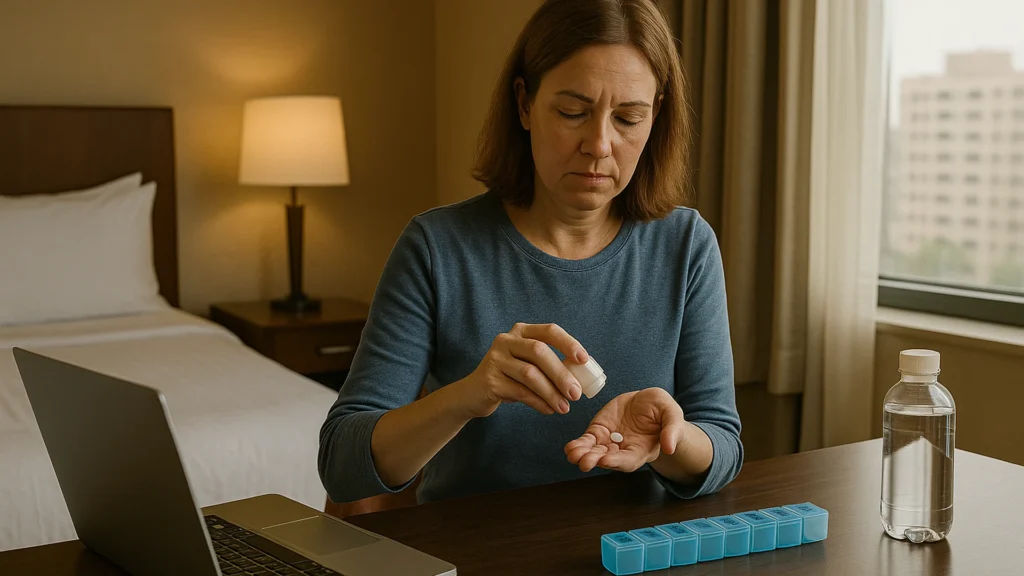
Managing medications while living abroad

Chronic health conditions don’t have to stop you from teaching abroad. You just need better planning than most others. The reality is that managing conditions like diabetes, asthma, or heart problems overseas requires more preparation, but thousands of teachers do this successfully every year.

Your success depends on these essential tips:

  1. Stock up on medications before you leave: Pack at least six months’ worth in original containers, along with prescriptions that include generic drug names. Why? Because different countries often stock different brands than what you’re used to in Australia. So, having your own supply prevents treatment gaps.
  2. Specialist care doesn’t have to be a mystery: Research English-speaking doctors who treat your condition before you even book your flight. For example, Bumrungrad International Hospital in Bangkok has an online directory where you can browse specialists by condition and language. Finding quality care becomes much easier when you’re not doing it during a health crisis.
  3. Your medical history travels with you: Though many people carry hard copies of their prescriptions, having a digital copy is safest nowadays. We recommend that you store copies of your test results, treatment plans, and medical records in cloud storage so new doctors can understand your case much faster.

With proper preparation, your chronic condition becomes just another part of your teaching adventure, not a roadblock to it.

Which Health Insurance Options are Available Abroad?

You know what catches most Aussie teachers off guard? Medicare benefits cover practically nothing once you leave Australian soil. Your regular health insurance back home won’t help much either when you’re dealing with medical costs overseas. The gap between what you expect and what you get can leave you with huge bills.

Here’s how your coverage options work:

  • Medicare only helps in certain countries: You get some emergency coverage in places like the UK and New Zealand. But you’ll still pay big gap payments even there.
  • Australian private health insurance has limits: Most policies give you minimal access overseas. From our experience, they usually only cover emergencies like ambulance rides, emergency surgery, or accident treatment.
  • International health insurance fills the gaps: Such plans cover your routine doctor visits, specialist appointments, prescription medicines, and even dental care. Unlike Australian policies, international coverage is built specifically for people who live abroad long-term.
  • Travel insurance suits shorter contracts: Teaching in Thailand for six months? Travel insurance can cover medical emergencies and get you back to Australia if something serious happens.

When you’ve got proper health cover sorted, you can concentrate on what you love most about teaching overseas.

Dental Care Abroad: What You Need to Know

Dentist examining patient in modern overseas dental clinic

You’re probably already aware that dental care abroad is much cheaper than in Australia (where isn’t?) Most teachers don’t think about dental care until they’re lying in a foreign dentist’s chair, wondering how much this will set them back.

You need to keep this in mind: dental expenses rarely get covered by travel insurance or basic international health plans.

The positive side? Many teaching destinations offer excellent dental care at much lower costs than in Australia.

The countries I am referring to are Thailand, Vietnam, and Costa Rica. They have built solid reputations as dental tourism hubs. Many clinics in these countries cater specifically to English-speaking expats and maintain high standards.

You can avoid panic moments simply by preparing beforehand, by which we mean do your research on dental clinics in your destination city before you need them. Read reviews from other Australian teachers and save contact details for highly-rated practices. This gives you quick access to quality care when emergencies happen.

Some teachers even plan routine cleanings during school holidays to take advantage of these savings. With dental care crossed off the list, let’s dive into the action plan.

Your Ongoing Wellness Action Plan

Now that we’ve covered the groundwork, let’s talk about making wellness a natural part of your teaching adventure abroad. Your healthcare needs don’t disappear once you reach your destination. They change and adapt as you settle into your new life and routine.

Here’s your monthly wellness action plan:

  1. Check in with yourself about mental health, fitness, and medical needs
  2. Always keep phone notes about adapting to local food, climate, and stress levels
  3. We strongly advise you to join expat teacher communities that understand wellness challenges abroad

Remember that taking care of your well-being makes you a better teacher. When you feel confident about your health preparations, you can focus on what you love most about teaching.

Ready to begin your teaching adventure? Biography Shelf has been connecting certified Australian teachers with quality schools worldwide since 2007. We’ll help you find the ideal overseas position.
Digital Teaching Hacks

Classroom Technology Hacks for ESL Teachers Abroad

With thousands of ESL teachers heading overseas each year, your classroom skills won’t count for much if students can’t follow along when the tech goes sideways. That’s exactly why digital preparation is so important.

Digital preparation for ESL teachers serves as a strategic path to boost your reliability, strengthen engagement, and deliver real results. When you build a well-planned digital toolkit, you become the educator who keeps lessons running smoothly in any classroom, anywhere in the world.

In this guide, we will explore practical technology tips for teachers working abroad. You will see how digital tools help ESL teachers and pick up strategies you can use right away for classroom success.

Stick with us to find out everything about digital hacks that work in any classroom worldwide.

Must-Have ESL Teaching Tools That Never Fail

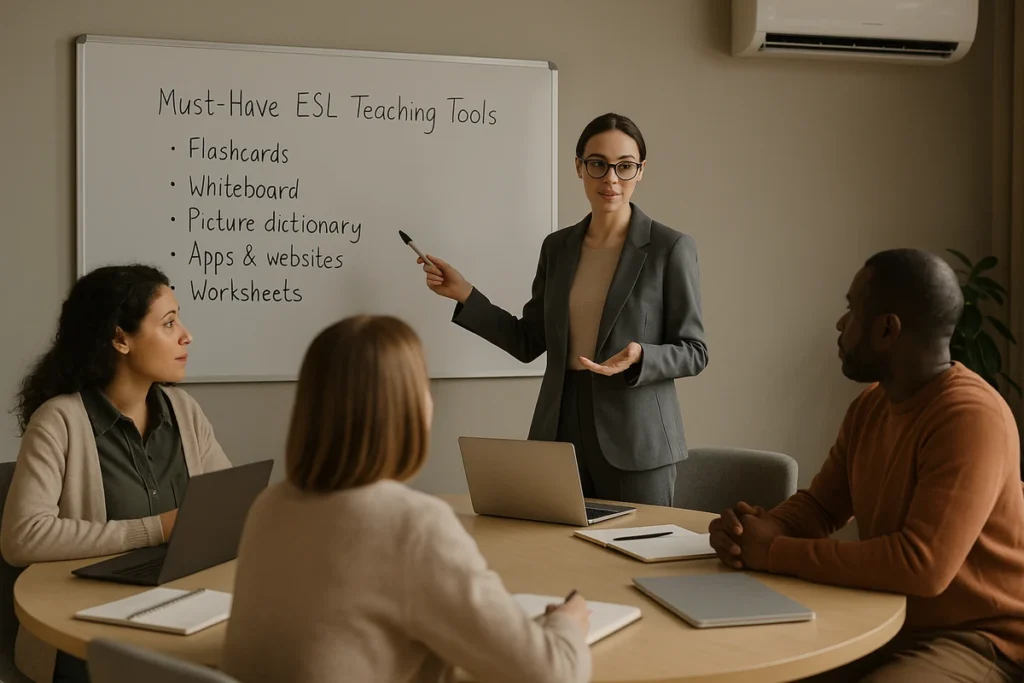
Let’s get real about the challenges of teaching abroad. They include: limited budgets, unreliable WiFi, and tech that crashes when you need it most. But don’t worry, these ESL teaching tools are designed to work when everything else fails.

Here are the tools that won’t let you down when everything else fails:

  • Interactive whiteboard apps that work offline: When connectivity crashes mid-class, Jamboard and OpenBoard keep lessons moving forward seamlessly. Students can still interact with content while you troubleshoot technical problems.
  • Simple lesson planners with cloud backup: Picture losing weeks of preparation to a laptop crash. Planbook Teacher prevents this nightmare by syncing across all your devices automatically.
  • Translation tools for multilingual students: Google Translate’s camera feature becomes your lifesaver when ESL learners speak zero English initially. It translates signs, worksheets, and student notes in real-time.
  • Audio recording software for pronunciation practice: Why repeat the same sounds again and again? Tools like Audacity let students listen on their own. They hear the differences clearly, and teachers can make simple guides for practice.
  • Presentation design on slow connections: Presentation makers like Canva work smoothly, even on slow internet connections. Unlike large PowerPoint files, Canva’s light templates load fast, so you can create visuals without lag or crashes.

After covering the core, let’s focus on lesson plans that truly engage.

Must-Have ESL Teaching Tools

Dynamic Lesson Plans That Travel Well

Cookie-cutter lesson plans crumble the moment you step into a new culture. For example, what worked in Australia might confuse students in Thailand or bore learners in Brazil. The same plan everywhere is like wearing a winter coat in summer, possible but completely wrong.

That means the solution isn’t scrapping your methods but building flexibility into every lesson.

The framework covers three adaptable approaches:

Template Systems That Bend Without Breaking

Flexibility starts with frameworks that accommodate cultural differences. For you as an ESL teacher, this means creating templates with changeable sections where you can swap in local examples and cultural references that connect with your specific students. After building these templates, you can adjust them to any student group without major rewrites.

Cultural Bridge-Building Techniques

Why teach past tense with American historical events when local history works better? It’s undeniable that students learn a new language better when it connects to things they already know. This makes English feel useful instead of separate from their everyday life.

Emergency Backup Strategies

Every teacher needs a Plan B for unexpected situations. The practical approach involves keeping simple activities that work without technology, the internet, or specific materials handy. These backup plans often become your most engaging teaching moments with students.

Now that your lessons can adapt anywhere, it’s time to learn the free resources that make teaching abroad easier.

Free ESL Resources Every Global Teacher Needs

Free doesn’t always mean good when it comes to ESL resources, but some platforms genuinely deliver professional-quality materials. But there is a challenge that people often overlook: choosing helpful resources over useless websites.

Not all platforms are created equal, but these three prove their worth. Sites like British Council Learn English, Cambridge English Online, and News in Slow English offer reliable, structured content. They function effectively regardless of your location or internet restrictions.

Based on our experience, teachers who create offline resource libraries before travelling report 50% fewer classroom preparation struggles when technology fails abroad.

Building Your Global Classroom Environment

Your classroom setup shouldn’t depend on luck or local IT support when teaching abroad. What you need is a classroom setup that works the same way in every country you teach.

You can follow this progression to set up anywhere:

  1. Digital Workspace Essentials: Muscle memory saves time. That’s why you should set up all your devices the same way. For example, use the same bookmarks, shortcuts, and folder layouts everywhere. After you develop these habits, you feel comfortable right away.
  2. Visual Environment Creation: What message does your background send to students? It signals how much you value them. When you blend professionalism with local cultural touches, you show respect and help learners feel more connected.
  3. Connectivity Problem-Solving: Expect the internet to fail at the worst moment. To stay prepared, download resources that work offline and set up phone hotspots as backups. Plan other ways as well to deliver your lessons before problems happen.
  4. Inclusive Space Design: Every student learns differently. For this reason, you should create different ways for students to learn through seeing, hearing, and reading. In this way, students from all cultures and backgrounds can benefit from this learning.
  5. Tech Troubleshooting Basics: Don’t let glitches derail you. Instead, rely on quick fixes for projectors, networks, and devices to show confidence and keep lessons running smoothly.

A strong classroom base clears the way for effective tech use ahead.

Building Your Global Classroom Environment

Google Slides Tricks That Save Hours

Google Slides beats PowerPoint hands down for international teaching. Since it is cloud-based, you avoid compatibility issues and those crashes on outdated school computers.

Even better, the collaboration tools reshape lesson prep completely. This means a teaching assistant can add cultural context overnight. Plus, students contribute examples from their own world instead of confusing foreign references.

Beyond collaboration, voice embedding becomes a powerful tool for pronunciation work. Teachers record difficult sounds, place them in their slides, and give students the freedom to practice independently without breaking the lesson flow.

This streamlined approach consistently saves hours each week and makes teaching more efficient.

Organising Your School Year Digitally

Each country runs its schools differently. Their calendars don’t match up, which creates problems for teachers. What makes this even more complex is that you’re juggling local holidays, assessment schedules, and administrative requirements that change based on your teaching location.

Experienced teachers use this layered approach:

  • Long-term Planning Tools: Calendar apps that sync everywhere prevent scheduling chaos. You can also use them to align your lesson goals with school requirements while staying consistent for your students.
  • Monthly Progress Tracking: Language barriers mean students advance at completely different rates. While one student might excel at speaking, another struggles with writing basics. That’s where simple tracking tools become your lifesaver. Spreadsheet templates or apps like Teacherkit let you monitor everyone’s progress without sacrificing your personal time to endless paperwork.
  • Weekly Logistics Management: Wasting time coordinating through email isn’t a good option anymore. It’s because modern shared tools handle everything automatically. Through digital planners, local staff stay updated on schedule changes, meetings, and administrative deadlines seamlessly.

Your digital setup is complete at this point. Now we can explore educational resources that support your teaching.

British Council Resources Plus Hidden Gems

Imagine building a house without a strong base. British Council resources provide that foundation, but they’re only the beginning. You get better results when you pair them with creative platforms that bring cultural richness and engage students.

Official Powerhouses vs Underground Favourites

British Council Learn English provides reliable content that schools around the world trust. Meanwhile, platforms like FluentU and English Central bring in video-based learning. These tools engage younger students who prefer interactive content.

When you look at regional preferences, the picture shifts further. For instance, European students often connect well with BBC Learning English, while many learners in Asia lean toward Visual English lessons. Our recommendation is: check how well these work with your internet to make the best choice. This ensures the platforms you pick work reliably in your classroom.

Of course, quality resources are just half of the equation. The other half is about streamlining your workflow to maximize teaching impact and minimize time spent.

Time-Saving Automation Hacks

Time becomes your scarcest resource when teaching abroad. At the same time, you’re dealing with lesson planning, cultural adaptation, and even learning a new language. That’s where automation steps in to handle repetitive tasks so you can focus on actual teaching.

These three areas offer significant time-saving potential:

Grading That Happens While You Sleep

Google Forms creates self-grading quizzes for vocabulary and grammar practice. This setup gives students quick results and shows you exactly where they struggle. From then on, it handles the work without demanding extra attention.

Time-Saving Automation Hacks

Feedback Systems That Scale

Record video explanations for common errors instead of writing the same comments repeatedly. In turn, this lets students hear your tone and see your expressions, so the feedback feels personal even when automated.

Content Creation Shortcuts

You can rely on AI tools like ChatGPT to create practice sentences with local cultural flavor. The tool delivers ready-to-use content that fits your students’ lives and reinforces grammar. Drawing from our experience, this approach saves 3-4 hours weekly on lesson preparation tasks.

Put all three into practice and you will quickly notice how much lighter your weekly workload feels. You will also find that it gives you more focus for real teaching.

Live Captions and Accessibility Magic

You might think live captions only help students with hearing challenges, but that’s completely wrong. They benefit every single learner in your international classroom, especially with unfamiliar accents or complex vocabulary that students haven’t encountered before.

The real impact comes when students see and hear simultaneously. In that moment, spelling becomes clear, pronunciation makes sense, and comprehension improves dramatically.

Most platforms now have automatic captions, so setup is quick and easy. Through our hands-on experience, classrooms that use captions see more engaged students and fewer requests to repeat things.

Start Your Teaching Adventure With Confidence

International ESL teaching demands technical skills that traditional training programs rarely address effectively. This gap means many teachers struggle with connectivity issues, cultural adaptation, and resource limitations that derail classroom success. However, effective digital preparation transforms these challenges into manageable opportunities.

This guide explored practical tools, flexible lesson frameworks, quality resources, workspace organization, and presentation techniques for global educators. We also talked about planning your whole school year, finding helpful websites, ways to save time, and making sure all students can learn well.

Biography Shelf has supported Australian teachers worldwide since 2007. Grow your teaching career overseas using our reliable placement network in Europe, Asia, Latin America, and more.